


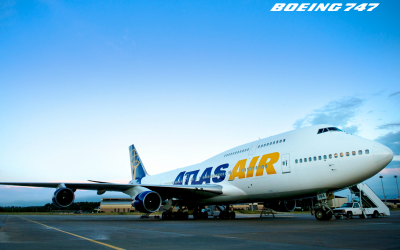
Photo Credits: jakubgojda/Canva
CommentaryCleared For Pragmatism: Aviation's Net-Zero Ambition Meets Market Reality
The World Economic Forum’s Global Aviation Sustainability Outlook 2026 arrives at a pivotal moment for the sector. Record passenger numbers of 10.2 billion are forecast for this year, yet the cost and geopolitical volatility surrounding sustainable aviation fuel (SAF) threaten to outpace the industry’s capacity to decarbonise. For Ireland — handling over 40 million passengers annually across Dublin, Cork and Shannon, with carriers deeply embedded in transatlantic and intra-European markets — the WEF report’s findings translate into immediate commercial and regulatory exposure.
The report marks a significant shift in register: net-zero aviation by 2050 remains the declared destination, but the pathway is being actively renegotiated. The sector appears justified in embracing what the WEF terms ‘ambitious pragmatism’ — acknowledging structural impediments without retreating from long-term commitments. Three developments demand C-suite attention: the SAF price and supply gap, the fragmentation of global policy, and the operational disruptions quietly eroding decarbonisation budgets.
The SAF affordability problem is concrete. European prices approached $3,000 (approximately €2,600) per metric tonne by late 2025 — over $2,000 (€1,733) above conventional jet fuel, per S&P Global Energy Platts data cited in the WEF report. Global SAF production met just 0.6 per cent of jet fuel demand. EU and UK mandates requiring 2 per cent blending from 2025, rising to 6 per cent by 2030 under ReFuelEU Aviation, will transmit these costs directly to Irish carriers operating on price-sensitive routes.
Divergent global policy is compounding strategic uncertainty. The EU has committed over €2.9 billion through its Sustainable Transport Investment Plan; the US has simultaneously capped SAF tax credits at $1 (€0.87) per gallon under restructured 45Z provisions, excluding indirect land-use change from life-cycle calculations in direct conflict with ICAO standards. Feedstock trade flows have also fractured, with US imports of Chinese used cooking oil down 43 per cent in the first seven months of 2025. Ireland, without domestic SAF production and dependent on imports for virtually all jet fuel, is acutely exposed to these disruptions.
Operational risks are quietly eroding decarbonisation capacity. Ten major cyberattacks struck aviation in 2025; a ransomware incident cascaded through Heathrow, Brussels and Berlin. A substation fire at Heathrow disrupted hundreds of thousands of passengers; the Iberian power outage grounded flights across Spain and Portugal. Airbus delivered just under 800 aircraft against surging demand, leaving carriers flying older, less efficient fleets. For Irish operators, structurally dependent on leased narrow-body aircraft with long replacement cycles, manufacturing constraints and SAF pricing together compound decarbonisation risk.
Three actions merit priority. Irish airports and airlines should engage with the European SAF Early Movers Coalition’s e-SAF double-sided auction mechanism — expected by 2026 — to secure preferential offtake ahead of post-2028 demand tightening. Ireland’s Department of Transport should assess domestic SAF blending infrastructure, following the UK’s independent blending hub model, to reduce continental supply dependency. Irish carriers should also advance book-and-claim SAF certificate adoption for corporate travel as the Science Based Targets initiative moves towards formally recognising such mechanisms.
Aviation’s net-zero destination remains fixed; its flight path has grown considerably more turbulent. The WEF’s 2026 outlook is unambiguous: policy stability, supply-chain resilience and coordinated public-private investment are non-negotiable for delivery. For Ireland, whose aviation connectivity underpins inward investment and tourism, the stakes extend well beyond regulatory compliance. Whether Irish aviation reaches 2030 mandates from a position of strategic strength or costly reactive exposure will depend on decisions taken in the next 12 months.
(The views expressed by the writer are his/her own and do not necessarily reflect the views or positions of BusinessRiver.)




Discover What's Happening

Explore our newsletters
Join our Newsletter to receive the latest industry trends, expert tips, and exclusive insights delivered straight to your inbox!



.png)